Case File · Documentaries
Case File: The Alleged 1948 High School Propaganda Film
What an unidentified classroom film can—and cannot—tell us about persuasion, education, and Cold War messaging.
- Date
- 1948 (claimed; unverified)
- Location
- Unknown
- Classification
- Historical media claim; unverified
- Key witnesses
- Unknown
Overview
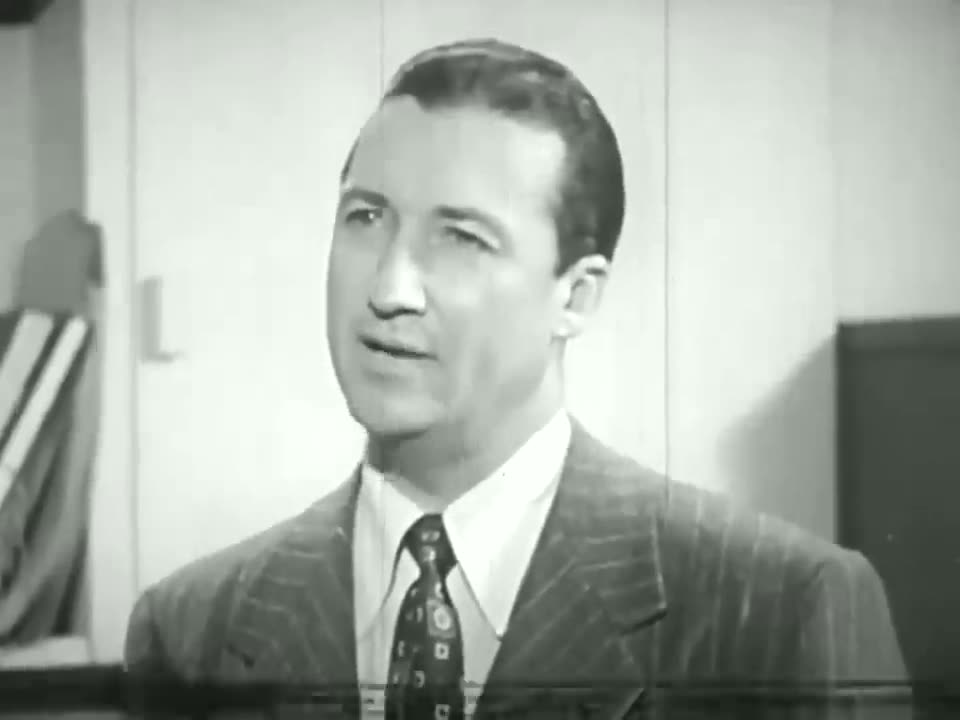
The video title “PROPAGANDA - They Showed This To High School Kids In 1948! Would They Allow This Today” presents a provocative historical claim: a film characterized as propaganda was shown to high school students in 1948. It also invites viewers to compare past classroom standards with those of today.
However, the title alone does not identify the original film, its producer, its country of origin, or the schools that supposedly screened it. No footage, transcript, credits, or supporting records accompanied this case request. Consequently, neither the production date nor the classroom-use claim can be independently established here.
This dossier examines the claim’s evidentiary limits and historical context rather than attributing content to an unidentified film. Although AlienTube often investigates UFO and UAP subjects, nothing in the supplied title establishes an extraterrestrial, military-sighting, or government-disclosure connection.
The Incident & Timeline
The claimed classroom screening
The central allegation is that high school students watched the material in 1948. That could refer to a film’s release year, a documented screening date, or a date assigned by a later uploader. Those possibilities are not interchangeable.
A film produced in 1948 might have circulated in classrooms for years afterward. Conversely, a film shown during 1948 could have been produced earlier. Establishing either claim requires identifying the original work and tracing its distribution.
The phrase “they showed this” also leaves the responsible party undefined. It could mean a teacher, school district, educational distributor, government agency, or private organization. None can responsibly be named from the available information.
Relevant historical background
If the title refers to the United States, 1948 falls during the early Cold War. Political messaging, civic education, and debates about ideological influence were prominent features of public life.
A limited contextual timeline helps explain the setting:
- 1947: The Truman Doctrine articulated American support for countries resisting coercion by armed minorities or outside pressures.
- 1947: Congressional investigations into alleged communist influence in Hollywood intensified controversy over film and politics.
- 1948: The Marshall Plan began, while the Berlin Blockade and ensuing airlift heightened East–West tensions.
- Date unknown: The modern video received the supplied title. Its publication date and relationship to the original material are unverified here.
These events establish context, not provenance. They do not demonstrate that this particular film concerned communism, foreign policy, or any other specific topic.
Evidence
What is actually available
The only supplied evidence is the modern video title. It supports a narrow conclusion: the video is being presented as historical school propaganda associated with 1948.
It does not establish:
- The original film’s title, runtime, or release date.
- Whether the surviving footage is complete or edited.
- Who funded, produced, or distributed it.
- Whether any high school actually screened it.
- Whether classroom use was local, widespread, required, or optional.
- Whether the film was originally described as propaganda.
These gaps matter because a modern headline can combine an authentic archival clip with an unsupported claim about its audience.
What would strengthen the case
The most useful starting point would be the film’s opening and closing credits. A production company, copyright notice, distributor logo, or catalog number could help locate an archival record.
Evidence of intended school distribution might include an educational-film catalog, teacher’s guide, or distributor advertisement. Evidence of an actual screening would be stronger still: a school newsletter, lesson plan, audiovisual booking record, or contemporaneous report.
These sources answer different questions. Being marketed to schools does not prove a particular school showed a film. One documented screening does not establish nationwide classroom practice.
A full-length copy would also allow viewers to distinguish the original message from modern narration, selective excerpts, or editorial framing.
Official Explanations
No official explanation can be attributed to a producer, school authority, or government body because the underlying film has not been identified. Claiming that officials defended, banned, commissioned, or suppressed it would exceed the evidence.
More generally, classroom films of this period served varied purposes. They could teach academic subjects, promote public health, explain citizenship, encourage social conformity, or advance an institution’s preferred worldview. Government agencies, commercial producers, nonprofits, and other organizations participated in educational filmmaking.
Calling a film propaganda requires examining how it persuades. Relevant features include selective presentation, emotionally loaded language, idealized authority figures, misleading comparisons, and the exclusion of competing perspectives. Propaganda can contain accurate statements while arranging them to encourage a predetermined conclusion.
At the same time, instructional intent alone does not make a film deceptive. A balanced assessment should separate factual accuracy, persuasive purpose, sponsorship, and classroom context.
Unexplained Anomalies
An unresolved source, not a demonstrated mystery
The unresolved issues here concern provenance and framing. They are not evidence of a hidden operation or extraordinary event.
The main unanswered questions are:
- Date: What independently connects the film or screening to 1948?
- Audience: What documents identify high school students as actual viewers?
- Sponsorship: Who paid for the film, and was that relationship disclosed?
- Completeness: Does the uploaded version preserve the original sequence and soundtrack?
- Interpretation: Is “propaganda” supported by the content, or primarily supplied by the modern headline?
Without answers, the strongest conclusion is that the title’s historical claim remains unverified—not that it has been disproved.
Would schools allow it today?
There is no universal answer. School policies vary by jurisdiction, student age, subject, and the material’s content.
A film considered inappropriate as straightforward instruction might still be used as a primary source in history or media-literacy lessons. Showing students propaganda for critical analysis is different from presenting its message as authoritative guidance.
The meaningful question is therefore not simply whether a school would screen it, but why, with what context, and under which instructional safeguards.
Why It Still Matters
This case highlights a problem shared by historical documentaries and UFO investigations: compelling presentation can outrun source verification. Archival-looking images, confident narration, and a precise year can create credibility without establishing the underlying claim.
For viewers researching a purported 1948 high school propaganda film, the best next step is identification, not speculation. Recovering the original title and a reliable archival copy would make substantive analysis possible. Documentary evidence of classroom use would then clarify whether the headline describes a verified practice or an unsupported generalization.
Until that material is available, the responsible verdict is limited: the historical setting is plausible, but this particular film’s identity, date, content, and school use remain unconfirmed.
Watch the video, examine its sourcing, and cast your verdict.