Case File · Military & Radar
Are UFOs Alien—or Secret Human Tech?
Case File: Testing the leading explanations for unidentified aerial phenomena
🛸 AlienTube Investigator
Powered by Grok 𝕏Ask anything about this sighting. Your first question is free — sign in or share on 𝕏 for more.
- Date
- Multiple dates
- Location
- Worldwide
- Classification
- Unresolved identification debate
- Key witnesses
- Military personnel and civilians
Overview
Are UFOs extraterrestrial spacecraft, classified human technology, or something more ordinary? The evidence does not support one answer for every sighting. UFO—unidentified flying object—and UAP—unidentified anomalous phenomena—describe an identification problem, not an established origin.
Publicly documented reports include misidentified aircraft, balloons, drones, satellites, atmospheric effects, and sensor artifacts. Others remain unresolved because investigators lack sufficient information. Classified aircraft provide a genuine historical precedent for unfamiliar objects being mistaken for something extraordinary. However, that precedent does not prove that every unexplained encounter involves a secret weapons program.
The extraterrestrial hypothesis remains a possibility people propose, not a conclusion established by publicly available evidence. This case file examines the competing explanations and the limits of what prominent military encounters can tell us.
The Incident & Timeline
A debate spanning decades
There is no single incident behind this question. Instead, several developments shaped the modern UFO debate:
- 1947: Kenneth Arnold reported unusual objects near Mount Rainier, helping launch the modern “flying saucer” era. His report did not establish what the objects were.
- 1950s–1960s: High-altitude U-2 and A-12 reconnaissance operations created opportunities for sightings of aircraft whose capabilities and missions were classified.
- 1969: The U.S. Air Force announced the termination of Project Blue Book. Its conclusions did not establish an extraterrestrial explanation for UFO reports, although some cases remained unidentified.
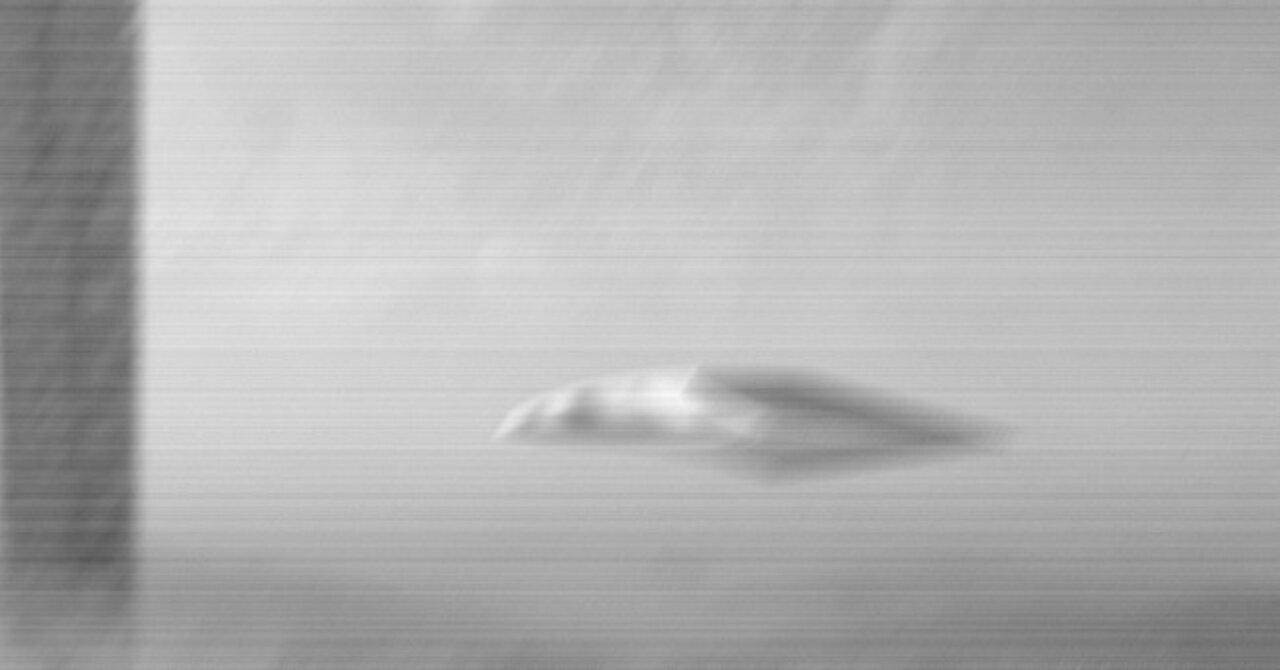
- November 2004: U.S. Navy personnel operating with the USS Nimitz reported an encounter off Southern California involving a white, elongated object later nicknamed the “Tic Tac.”
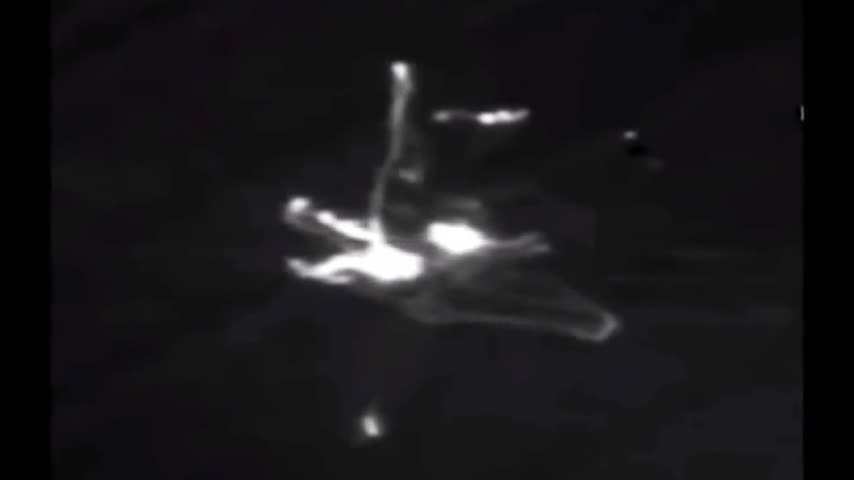
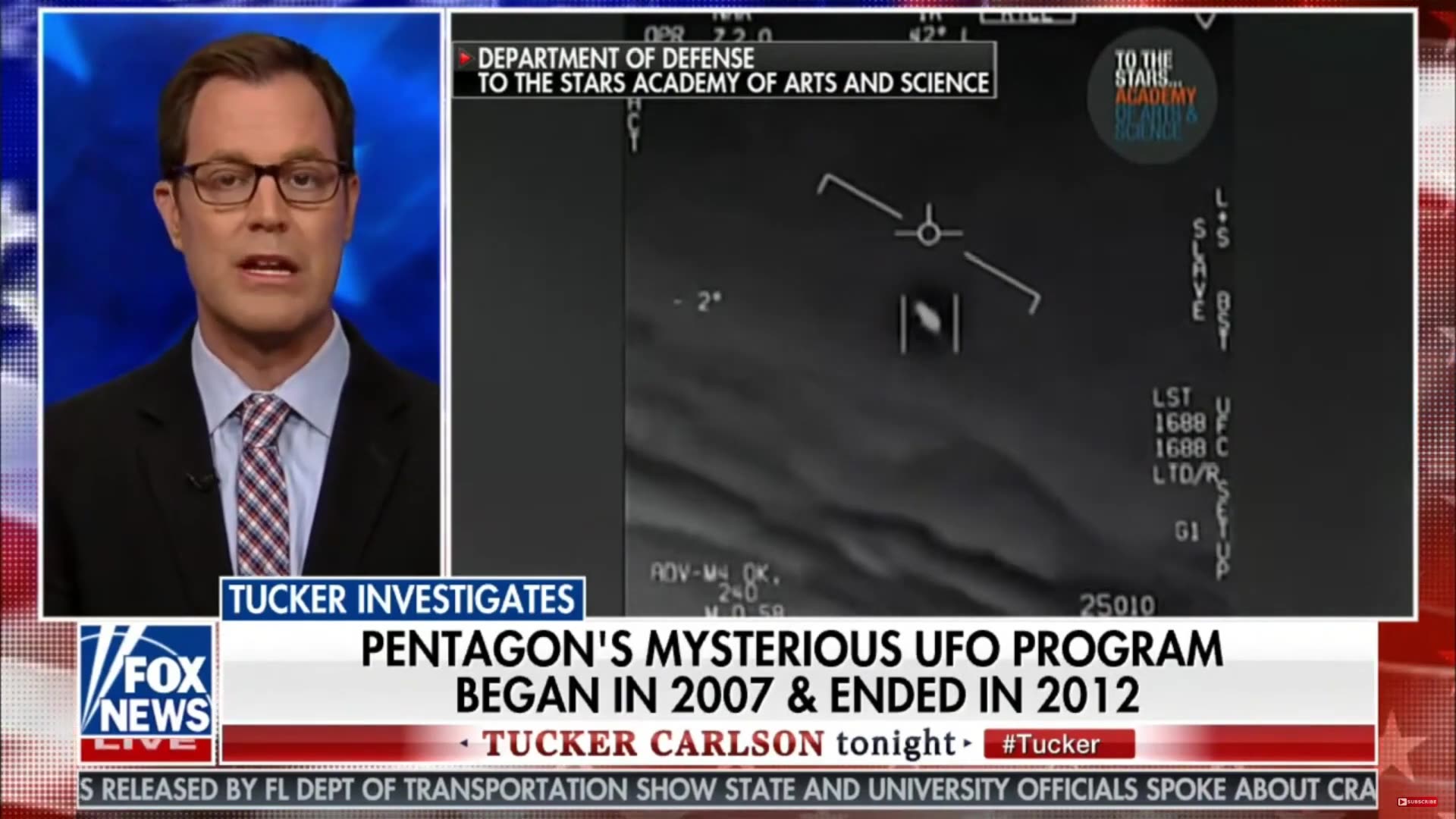
- 2015: Navy aircrew recorded the footage commonly called “Gimbal” and “GoFast,” which subsequently became central to public discussion.
- April 2020: The Department of Defense officially released three Navy videos, confirming that the circulating recordings were genuine Navy footage—not that they depicted alien spacecraft.
- 2023–2024: NASA and the Pentagon’s All-domain Anomaly Resolution Office, or AARO, published assessments emphasizing better data collection and the absence of verified evidence establishing extraterrestrial technology.
Why the Navy encounters became pivotal
The Nimitz case combines pilot testimony, reports of radar observations, and infrared footage recorded during a later flight. Commander David Fravor and other aviators described an object they could not identify, with Fravor reporting apparently extraordinary movement.
That makes the encounter important, but the public record has limitations. The released infrared clip is not a complete recording of Fravor’s visual encounter. Nor does the public possess a comprehensive, independently authenticated collection of the reported radar data. These distinctions matter when evaluating claims about acceleration, speed, and technological origin.
Evidence
What the available material can establish
Evidence quality varies substantially across UFO cases:
- Witness testimony establishes what a person recalls observing. Experience can improve recognition, but it does not eliminate errors in estimating distance, size, or movement.
- Video and infrared imagery preserve observations, yet interpretation depends on camera geometry, tracking behavior, range, and platform motion.
- Radar data can support an object's presence and movement, but reliable interpretation requires system context, calibration, and access to original records.
- Physical material could potentially provide strong evidence, but claims require documented provenance, controlled testing, and independent replication.
Multiple independent sensors can strengthen a case. However, reports that several sensors detected something are not equivalent to public access to synchronized, validated measurements.
Evidence for secret human technology
Declassified reconnaissance history demonstrates that advanced aircraft can operate before the public knows they exist. CIA historical accounts connect some Cold War UFO reporting with U-2 and related reconnaissance activity.
This is evidence that secrecy can produce identification gaps. It is not evidence that a particular modern UAP belongs to a classified program. Assigning an encounter to U.S. black projects, foreign drones, or electronic warfare requires case-specific support.
Evidence for extraterrestrial technology
No publicly verified body of evidence has established that a UFO is an extraterrestrial vehicle. Claims involving recovered craft, unusual materials, or concealed programs have attracted official attention, but allegations and testimony are not substitutes for independently testable evidence.
That conclusion concerns the available evidence. It does not establish that extraterrestrial life is impossible or that every reported event has been explained.
Official Explanations
NASA: improve the measurements
NASA’s September 2023 UAP independent study report emphasized the difficulty of drawing scientific conclusions from inconsistent observations and limited data. It recommended more systematic collection, suitable instrumentation, and reduced stigma around reporting.
The report was not a comprehensive reinvestigation of every famous UFO encounter. Its central contribution was a framework for studying future observations more rigorously.
AARO: no verified extraterrestrial finding
AARO’s March 2024 historical report said it found no evidence that U.S. government investigations, academic research, or official review panels had confirmed a UAP sighting as extraterrestrial technology. It also reported finding no empirical evidence for claims that the government and private companies had reverse-engineered extraterrestrial technology.
Those are the office’s findings, not proof that every historical allegation can be conclusively settled from public records. Critics question the completeness and transparency of official investigations. Such concerns warrant scrutiny, but they do not independently establish an alien explanation.
Official case assessments have also identified ordinary objects and observational effects. An unresolved case may simply contain too little information to support identification.
Unexplained Anomalies
Apparent performance versus measured performance
Reports of abrupt acceleration, hovering without visible propulsion, or unusual movement are the strongest drivers of the alien-versus-secret-tech debate. The crucial question is whether those characteristics were reliably measured.
An object can appear to move rapidly because the observing aircraft is moving—a geometric effect called parallax. Infrared glare and camera behavior can alter apparent shape or orientation. These mechanisms must be tested against individual recordings, not used as universal dismissals.
Conversely, describing motion as beyond known engineering requires dependable range, timing, and trajectory measurements. A striking visual impression alone cannot establish that physics-defying acceleration occurred.
The missing evidence problem
Some military encounters remain difficult to evaluate because relevant data are unavailable, incomplete, or classified. This leaves genuine uncertainty. It does not tell us which hypothesis fills the gap.
Secrecy can protect aircraft capabilities, intelligence methods, or sensor performance without concealing extraterrestrial contact. Equally, invoking a secret program without supporting evidence merely replaces one unknown with another.
Why It Still Matters
The UFO question matters even without an alien finding. Unidentified objects near military operations can represent aviation hazards, unauthorized surveillance, or weaknesses in detection and reporting.
The most productive investigation avoids a false binary. An observation need not be either an extraterrestrial craft or revolutionary human technology. Ordinary objects, deceptive appearances, and inadequate information remain essential alternatives.
A persuasive breakthrough would require original data, reliable provenance, independent analysis, and conclusions that survive competing explanations. Until then, “unidentified” is a defensible finding—not a verdict about who built an object.
Watch the video, Are UFOs Alien—or Secret Human Tech?, and cast your verdict.
🛸 Community Verdict — What do you think?
0 votes castTap an option to vote